
The Next Real Estate Advantage:
AI, Blockchain & the De Weaver Sovereign Growth Loop™
From Web1 and Web2 to AI-Powered Intelligence and Programmable Ownership
A framework for earning trust earlier, retaining clients and building relationships that compound.
THE SOVEREIGN LEDGER™ #201 | Geoff De Weaver | Limitless USA LLC | November 11, 2026
INTRODUCTION
As the Sovereign Architect operating at the intersection of Web1 distribution, Web2 reach, Web3 programmable rails, and AI-driven intelligence, I have authored Report #201 of The Sovereign Ledger™ to redefine how global real estate operates. The global property market represents an estimated $625 trillion asset base—the world’s largest store of wealth—yet it remains constrained by paper-era friction, fragmented communication, and outdated transaction loops. My 40-year executive arc, spanning San Francisco’s early commercial internet era to high-stakes global media leadership and luxury real estate in New York and Florida, has proven one fundamental truth: market leadership belongs to those who turn information into verifiable trust and trust into friction-free execution.
This report introduces The De Weaver Sovereign Growth Loop™, a reimagined strategic architecture translating my 2015 closed-loop framework into the AI and programmable-ownership era of November 2026. Designed for venture capitalists, institutional funds, UHNWIs, luxury home buyers and sellers, corporate CEOs, and crypto pioneers, this framework delivers an aggressive, first-principles engineering approach to property assets. By applying an Elon-Musk-style lens—10x process compression, tight vertical integration, reusable infrastructure rails, continuous automation, and rapid velocity—we systematically dismantle legacy real estate gatekeepers.
Supported by my verified 1.62B+ aggregate global network reach, The Sovereign Ledger™ serves as the authoritative publishing rail and intellectual foundation for this revolution. We do not merely digitize existing workflows; we engineer horizontal rails that link Intelligent Acquisition, Verifiable Trust & Loyalty, Lifetime Value & Retention, and Trusted Advocacy & Referrals. At the core of this infrastructure sits human authority and REALATAR™, our 24/7 conversational avatar and AI digital twin execution engine. This introduction establishes the blueprint for capital allocators and industry visionaries ready to bypass obsolete friction and capture exponential yield across global real estate.
The opportunity is to make every relationship more useful
The next real estate advantage belongs to the people who can turn information into understanding, understanding into trust, and trust into well-executed decisions. Artificial intelligence can accelerate that progression. Blockchain can help preserve evidence. Neither can decide what a family values, make a defective property sound, or earn a reputation on our behalf. The opportunity is to connect these capabilities to a business system that serves people better from their first question to their next acquisition, refinancing, referral or generational transfer.
I have spent more than four decades working across brands, technology, communications and markets. The change I have witnessed from the commercial internet in San Francisco to the AI and programmable-ownership environment of November 2026 is extraordinary. We have moved from publishing information online to organizing conversations at global scale, and now toward software that can interpret documents, coordinate work and act within defined authority. The distance between an idea and a usable prototype has contracted. The responsibility for what that prototype does has grown.
That is why I am returning to a framework I used in 2015. The De Weaver Closed Loop connected acquisition, loyalty, retention and profitability, and evangelism and referrals. It reflected a simple commercial insight: the best new business often grows from the quality of the business you already serve. A client relationship should improve what you know, strengthen how you deliver, and create reasons for people to recommend you. A campaign may finish. The learning should continue.
The updated framework is The De Weaver Sovereign Growth Loop™. Its four stages are Intelligent Acquisition; Verifiable Trust & Loyalty; Lifetime Value & Retention; and Trusted Advocacy & Referrals. Human authority sits at the center. The word sovereign describes control over permissions, records and decisions. It does not mean exemption from law, independence from every service provider, or the ability to move property rights without the institutions that recognize them.
For an owner, the practical benefits should be understandable: fewer repeated requests for the same information, clearer decisions, a better record of who may act, and less uncertainty about what happens next. For a professional, the benefits should include more time for judgment and relationships, less administrative rework, and stronger evidence of the value delivered. For an institutional investor, the test is economic: does the system improve the quality, speed and cost of completing an approved task?
This report is a field manual for that test. The images are its organizing framework. Each represents a business obligation, a modern set of tools and a measurable outcome. They are intended to help readers see how the pieces connect, then ask better questions about implementation. A gold loop around a property is an illustration. The real loop consists of decisions, permissions, records, service and feedback.
My ambition for REALATAR™ is to develop an economic infrastructure layer that connects those elements across property workflows. The capabilities described here are a target architecture and a proposed operating model, unless a separate external example is explicitly identified as an existing implementation. They are not a claim that REALATAR™ already operates every function, has obtained every authorization, or has created a liquid market for every property.
To my readers in the United States and around the world: the purpose is to make a complex transition usable. My published 1.62B+ metric describes aggregate indexed global visibility derived from search-result snapshots. It is not a count of unique readers, subscribers, personal relationships or investors. The people who choose to read, question and apply this work are the community I am addressing. Precision about that distinction is part of the same trust discipline this report advocates. [S20]
The ambition remains limitless. The method is specific: establish the baseline, identify the friction, introduce the right capability, preserve human accountability, and measure what changed.
1. From Westport curiosity to the San Francisco internet
My interest in technology began before social media and before the commercial web became a daily business utility. As a teenager in Westport, Connecticut, I watched the early computing industry change what organizations could do. That experience shaped a habit I still use: look beneath the product announcement and ask what new capability has become available, who can access it, and how it changes the economics of work.
Across the years associated with IBM, HP, Acer, AT&T, Apple and TiVo, computing, connectivity and media became increasingly connected. These names belong to different periods and different parts of that evolution. They should not be compressed into a claim that every company, product or relationship began at the same moment. The important thread in my own experience is the progression from explaining unfamiliar technology to helping organizations understand how it could change their customers, markets and operating models.
San Francisco sharpened that perspective. Building in the commercial-internet era required more than putting a brochure on a screen. Companies had to learn how customers searched, how information changed expectations, how a digital experience could support a brand, and how to connect a new channel with an existing organization. The website was visible. The organizational changes behind it often determined whether it worked.
My published career record places agency partnership in the Nasdaq-listed internet era in 1996 and Omnicom digital leadership in 1999. I bring that history into this report as the background to my judgment, not as proof that a particular future product must succeed. Experience should improve the questions an operator asks. It should also make that operator more willing to distinguish what has been demonstrated from what still needs to be built. [S20]
Web1 expanded access to information. A company could explain itself beyond the limits of its physical location and opening hours. Search and websites changed discovery. The practical challenge was making information useful, credible and findable. In real estate, the ability to inspect listings and neighborhood information remotely began to change how buyers prepared before speaking to a professional.
Web2 expanded participation and distribution. Social platforms, video, reviews, mobile applications and cloud software made communication more continuous. Customers could compare experiences, recommend professionals and publish their own accounts. On Twitter, LinkedIn, Facebook and YouTube, I saw how a useful idea could travel through communities, how reputation could accumulate, and how quickly a weak claim could spread alongside a strong one.
The commercial lesson was that distribution and trust were connected but different. Reach could introduce an idea. Repetition could make it familiar. Neither necessarily made the underlying claim correct. A successful publishing operation therefore needed a recognizable voice, a coherent point of view, and a way for readers to inspect the substance behind the communication.
By 2015, the closed loop captured my view of how these activities should reinforce one another. Acquisition brought people into the relationship. Loyalty reflected their willingness to remain engaged. Retention and profitability tested whether the relationship created continuing value for both parties. Advocacy brought new people into the system through experience-based recommendations. The loop connected brand building with business development.
AI and Web3 add new capabilities to that structure. AI can assist with interpretation and coordination. Cryptographic tools can help establish control of identifiers, verify signatures and detect changes to records. Programmable systems can make certain steps conditional on specified approvals. Together, these tools can reduce the distance between a conversation and a properly prepared action.
The relationship remains human. A buyer may be moving because a parent needs care. An owner may be selling to simplify a family estate. A developer may be balancing construction risk against an investor’s timeline. Understanding the documents matters; understanding the decision matters just as much. Technology is most valuable when it gives a competent professional more room to do both.
The transition I see in November 2026 is therefore an expansion of capability around enduring obligations. We can discover more intelligently, explain more clearly, preserve stronger evidence and coordinate more consistently. We still have to keep promises, disclose uncertainty, respect consent and deliver a useful service. My original loop survives because those obligations survive.
2. Put the market on a defensible foundation
Scale matters when evaluating an infrastructure opportunity, but only when the numbers describe the same thing. Property stock, annual transaction volume, company revenue, assets under management and tokenized market capitalization are distinct measures. Combining them into a single giant number creates an impressive headline and an unusable business case.
Statista Market Insights estimates worldwide real estate value at $624.62 trillion in 2026, which this report rounds to approximately $625 trillion. Its published outlook gives a 3.03% compound annual growth rate for 2026–2031, reaching approximately $725.05 trillion by 2031. These are estimates and forecasts within that provider’s methodology. They are not a measurement of cash available to invest, annual property sales, or revenue accessible to REALATAR™. [S1]
Savills provides a different benchmark: $393.3 trillion at the start of 2025, covering residential and commercial property and agricultural land. Its estimate includes $286.9 trillion of residential property, $58.5 trillion of commercial property and $47.9 trillion of agricultural land. The total declined slightly over the preceding year in that series. Different dates, coverage and methods mean the Savills and Statista figures should be displayed as separate estimates, not spliced into a growth chart. [S2]
The opportunity is large under either benchmark. My strategy does not require pretending the estimates are interchangeable. It requires finding recurring problems that owners and institutions will pay to solve. A better authority record, a reusable diligence package or a reduction in avoidable rework can be valuable even when property prices are flat or falling.
The U.S. housing picture also needs a current baseline. NAR’s September 2026 release reports an annualized existing-home sales rate of 3.99 million, a $417,500 median existing-home price, and 4.8 months of inventory. The median price was 1.3% above the previous year, while sales were 2.2% lower year over year. These are national existing-home measures, not a forecast for every local market or every property type. [S3]
That evidence replaces the earlier copy’s generalized 20% annual price surge. It also changes the commercial argument. An owner does not need an indiscriminate boom to benefit from more precise information, lower process costs and better execution. In a selective market, those capabilities may become more useful because pricing mistakes, weak preparation and failed transactions are harder to absorb.
The old claims of a $1 trillion U.S. market doubling to $2 trillion, a $7.2 trillion global market, and synchronized 5.7% growth were not defined consistently enough to retain. If a figure describes annual transactions or industry revenue, it must say so. It cannot replace an estimate of the total standing value of property. This report uses the defined stock estimates above and measures operating opportunity at the workflow level.
| Measure | November 2026 reference | What it can tell us |
|---|---|---|
| Worldwide property value | Statista estimate of $624.62T for 2026 | Approximate asset-class scale within its methodology |
| Independent global stock benchmark | Savills estimate of $393.3T at start of 2025 | A separate valuation series with different scope and methods |
| U.S. existing-home sales | NAR September 2026 annualized rate of 3.99M | Activity in a defined U.S. housing segment |
| U.S. existing-home median price | $417,500, up 1.3% year over year | National transaction-price midpoint, not every home’s appreciation |
| REALATAR™ commercial opportunity | To be established through priced, measured deployments | Revenue and value supported by actual customer use |
For Florida, this distinction is essential. Palm Beach luxury property, Miami condominiums, Sarasota homes, Naples waterfront assets and Tampa commercial buildings do not share one demand curve. Insurance, reserves, maintenance, financing, taxes, building condition and local supply all matter. Global distribution can widen discovery. It cannot turn a weak local underwriting case into a strong one.
My conclusion is that real estate remains an enormous store of value whose workflows offer substantial room for improvement. The strongest infrastructure thesis works through cycles. It helps people understand and execute decisions with greater control, whether the market is expanding, repricing or waiting for confidence to return.
3. Why the acceleration is real and where it stops
The acceleration has several interacting causes. Computing systems can process more demanding workloads. Models can handle more kinds of information. Software interfaces make it easier to connect models with business tools. Investment is expanding the infrastructure. Standards and production financial systems offer examples of how records and money can become programmable. Each development matters differently to a property owner.
Stanford’s 2026 AI Index reports AI use at 88% of surveyed organizations, while its economy chapter notes that AI-agent deployment remains in the single digits across nearly all business functions. That combination is instructive: broad adoption of AI does not mean broad deployment of dependable autonomous workflows. The same report places U.S. private AI investment at $285.9 billion in 2025. These are dated research findings, not measurements of real estate performance. [S4]
A useful historical comparison comes from Stanford’s 2025 report. It found that the inference cost of a system performing at roughly GPT-3.5 level fell more than 280-fold between November 2022 and October 2024. The comparison concerns a particular capability level and period. It does not mean every advanced model, every task or every property workflow became 280 times cheaper. It does explain why tasks once too expensive to automate can become practical to test. [S5]
NVIDIA’s January 2026 Rubin announcement describes a system spanning six chips and claims up to a tenfold reduction in inference token cost relative to Blackwell under its stated comparison. This is a vendor performance claim, dependent on workload and configuration, rather than a universal saving a brokerage can book. The practical lesson is to evaluate the complete system: compute, memory, networking, software, data access and the latency a user will tolerate. [S6]
IDC’s November 2026 update reports $121.4 billion of AI infrastructure spending in Q2 2026, up 53% year over year, and raises its full-year forecast to $521 billion. It also describes demand broadening into CPU-based infrastructure. A property workflow needs orchestration, retrieval, storage and integration as well as model inference. Spending on the physical stack is evidence of buildout, not proof of profitability for its customers. [S7]
SoftBank reported on October 1, 2026 that it had completed a $30 billion follow-on investment in OpenAI, taking its cumulative investment to $64.6 billion. That is a company-reported capital commitment to AI development. It is neither a forecast for property prices nor validation of any individual startup. Its relevance is that the infrastructure supporting future applications is attracting capital at a scale that would have been difficult to imagine in the early commercial-web years. [S8]
For the real estate reader, the important question is what these developments enable. An assistant may prepare a first-pass summary of a document room overnight. A multilingual interface may explain a process in a buyer’s preferred language. A workflow may detect that a required approval is missing before a closing date approaches. A service system may notice that an insurance document or delegated authority is about to expire. Each is a task that can be tested independently.
McKinsey’s March 2026 real estate analysis estimates that agentic AI could generate roughly $430 billion to $550 billion in annual value across real estate, construction and development globally. This is modeled potential across a broad scope, not realized revenue and not value attributable to REALATAR™. It should not be compared directly with a narrower earlier estimate as though the difference were measured growth. The useful implication is that workflow redesign deserves serious examination. [S9]
Acceleration also creates a discipline problem. When generating a document becomes cheap, producing an inaccurate document becomes cheap. When software can take a sequence of actions, an incorrect assumption can propagate through that sequence. When a convincing voice or avatar can be synthesized, presentation becomes a weaker signal of authenticity. Faster capability increases the value of reliable identity, constrained permissions and reviewable evidence.
Gartner’s June 2025 forecast said more than 40% of agentic AI projects could be canceled by the end of 2027, citing costs, uncertain value and inadequate controls. Forrester’s 2026 predictions anticipated 25% of planned AI spending being deferred into 2027. These were forecasts, not completed cancellation or spending measurements. They support a sober commercial point: the value of adoption depends on execution, not the presence of the word agent in a proposal. [S10–S11]
The four clocks of a real estate workflow
A model works on a computational clock. It may generate a draft in seconds. An institution works on an operational clock: someone must review an exception, a lender must process a condition, a registry must accept a filing. A contract works on a legal clock: specified steps and deadlines determine rights and obligations. A market works on a liquidity clock: a willing, eligible counterparty and acceptable price must exist.
These clocks can be coordinated, but they cannot simply be declared identical. An AI-generated closing checklist can be immediate while the underlying inspection takes days. A token transfer can be technically fast while the legal interest is subject to restrictions. A valuation model can refresh while comparable transactions remain scarce. The right architecture makes these differences visible so that people know what is ready and what is still waiting.
This distinction is the foundation of a credible 10x ambition. A task that takes ten hours might be redesigned to take one hour at equal or better quality. That does not establish a tenfold reduction in the entire transaction timeline. The benefit must be named, measured and located within the process. It should survive a review of error rates, exceptions and total cost.
What changed from my 2025 first-principles blueprint
My LinkedIn article, published August 25, 2025, explored AI agents, digital identity, smart contracts and the prospect of a 10x improvement in property workflows. It is the direct conceptual predecessor to this report; the September 15, 2025 material supplied for this update is a separate earlier reference point. The present report extends the argument into a complete relationship and operating system. [S19]
Several propositions deserve a more precise formulation. Location still affects utility, risk, scarcity and price. Tokenization alone does not make a property instantly tradable. Smart contracts are not unbreakable. Language coverage does not establish legal translation quality. Agent capacity depends on data, integrations, monitoring and competent human review as well as compute. These refinements make the original ambition more executable.
I now organize the opportunity around a continuous relationship loop and a separate authority layer. The loop explains how business grows. The authority layer explains who may do what, using which information, under which conditions. Together, they provide a better foundation for the next phase of REALATAR™ than an isolated promise of automation.
4. The 2015 framework translated into November 2026
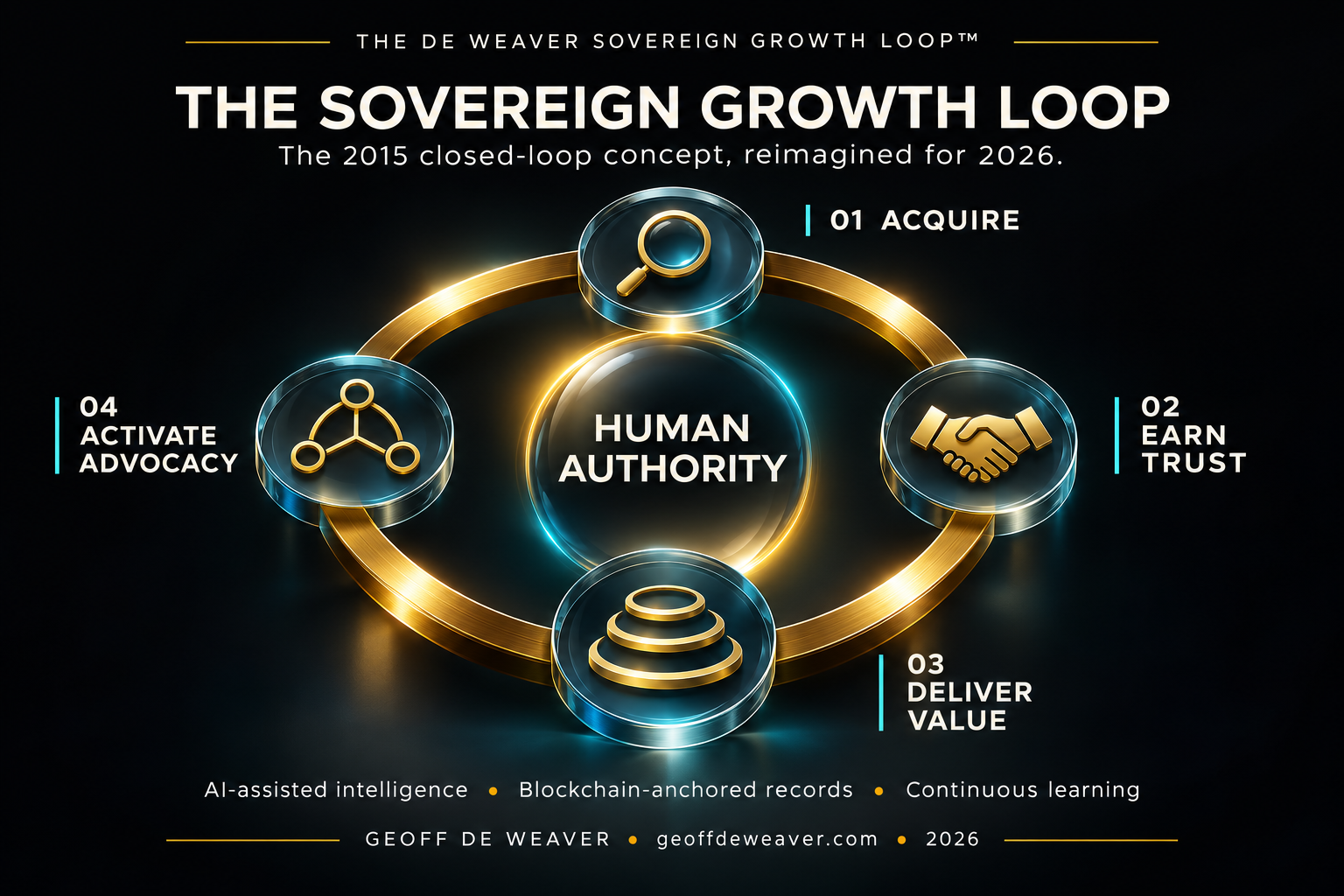
Figure 2. The framework in one view. Learning from delivery and advocacy returns to acquisition; human authority governs every stage.
| 2015 business term | Original meaning | November 2026 term | What the update adds |
|---|---|---|---|
| Acquisition | Attract and convert a relevant new customer | Intelligent Acquisition | Permissioned discovery, AI-assisted qualification and a clearer first decision |
| Building loyalty | Earn preference through experience and consistency | Verifiable Trust & Loyalty | Inspectable evidence, identity, scoped permissions and reliable service |
| Retention and profitability | Keep useful relationships and serve them economically | Lifetime Value & Retention | Continuing property intelligence, measured service costs and earned renewal |
| Evangelism and referrals | Encourage satisfied clients to recommend the business | Trusted Advocacy & Referrals | Consented introductions, transparent attribution and accountable follow-through |
The sequence is a teaching device, not a rigid funnel. Trust starts before acquisition and continues after a transaction. Retention begins with the first promise. Advocacy can introduce a new client or deepen an existing relationship. The loop is closed when the organization learns from what actually happened and uses that learning to improve the next experience.
In practical terms, each stage should have an owner, a record of decisions, a definition of success and a route for exceptions. Without those elements, the loop is a marketing picture. With them, it becomes a proposed management system that can be piloted, questioned and improved.
The next four chapters are the center of this report. Read them alongside the corresponding images. The gold lens represents relevance. The handshake represents an obligation supported by evidence. The rings represent value accumulated through service. The network represents trust extended through willing introductions. None of those symbols works alone.
5. Intelligent Acquisition

Figure 3. Intelligent Acquisition. AI-assisted discovery and human-qualified opportunity. The lens symbolizes relevance rather than indiscriminate reach.
Figure 3. Intelligent Acquisition. AI-assisted discovery and human-qualified opportunity. The lens symbolizes relevance rather than indiscriminate reach.
The 2015 definition
Acquisition meant attracting a prospective customer and converting interest into a business relationship. The tools included advertising, public relations, events, direct outreach, search, referrals and social content. A capable business tried to understand its audience, articulate a compelling benefit and follow up effectively. The economics depended on how much the organization spent to acquire a customer and what that relationship eventually produced.
Those disciplines still matter. A weak proposition does not become stronger because an AI system repeats it more frequently. A poorly understood buyer does not become better understood because a platform assigns a numerical score. The starting point is still a clear answer to a human question: why should this person pay attention, and what useful decision can we help them make?
In my 2015 illustration, acquisition was represented by a net. It expressed the search for new business in a memorable way. The 2026 image uses a lens because the commercial challenge has changed. Information is abundant, messages are abundant, and automated outreach is abundant. Attention is therefore only the beginning. Relevance, permission and readiness determine whether that attention becomes a useful conversation.
The November 2026 definition
Intelligent Acquisition means using permitted data and AI-assisted analysis to identify a relevant need, explain a credible next step and connect the person with an accountable human or approved workflow. Its purpose is to improve fit. The quality of the relationship begins with the accuracy of the first promise and the care taken with the first piece of information.
For real estate, fit includes more than a price range. A household may have a timing constraint, an accessibility requirement or a financing condition. A family office may have an investment mandate, reporting requirements and limits on exposure. A developer may need capital that understands a particular construction or leasing risk. A useful acquisition system gathers the necessary information without assuming that every visitor wants the same transaction.
The new vocabulary includes intent signals, meaning observable indications of interest; qualification, meaning a reasoned assessment of fit and readiness; and retrieval-augmented generation, meaning a model’s use of retrieved reference material when preparing an answer. None establishes certainty about a person’s private intentions. They are inputs to a conversation, subject to consent, data quality and human interpretation.
Start with the decision the reader is trying to make
A luxury buyer researching Palm Beach may be asking about privacy, flood exposure, insurance, transport or the practicalities of maintaining a second residence. An investor considering Miami might need to understand condominium obligations, financing assumptions and expected operating costs. A generic message promising access to exceptional property does not answer those questions. A useful briefing helps the reader determine what to investigate next.
The proposed REALATAR™ approach begins with a structured request. What is the intended use of the property? What range of capital is relevant? What time horizon applies? Which matters require specialist advice? Which information may be retained? The system should make clear that an automated interface is assisting the conversation, and it should offer a straightforward human handoff.
AI can then help organize approved materials into a preliminary briefing. It can distinguish confirmed facts from missing information, propose follow-up questions, and identify which professional should address each issue. The desired output is a better-prepared discussion. It is not an automated determination that a property suits someone based on incomplete information or inferred personal traits.
This requires restraint in personalization. A model may infer more than it should use. A marketing platform may optimize toward a population in ways an advertiser did not intend. My proposed operating rule is to use explicit needs and legitimate property criteria, minimize personal data, and have qualified reviewers evaluate housing-related targeting and access decisions. Technical capacity does not itself establish permission or fairness. Historical HUD guidance illustrates why AI-assisted housing advertising needs careful review. [S18]
A worked acquisition example
Consider an illustrative family office assessing a small portfolio of Florida properties. The office grants access to an approved acquisition brief and permits an assistant to summarize publicly available information and licensed data. The assistant identifies that one property lacks a current insurance quote, another has incomplete capital-expenditure records, and a third appears outside the stated investment mandate.
The useful output is not a confident ranking without explanation. It is a short list with source dates, missing evidence and reasons for inclusion. A human reviewer checks the material, confirms the office’s priorities and decides which owners or representatives to approach. The assistant can prepare the outreach, but it does not claim authority to negotiate or make commitments.
The receiving owner then sees a relevant request rather than a mass solicitation. The office has explained what it needs and why the property may fit. If the owner declines, that decision is recorded and respected. If the owner agrees, access can be expanded in stages. The acquisition process has already begun to establish the trust conditions that the next chapter develops.
Now compare the same process with a high-volume system that treats every property as a lead. The second system may generate more messages and more apparent activity. It may also generate more irrelevant replies, privacy complaints and work for staff. The first system should be judged on accepted, useful conversations and subsequent outcomes. The comparison is about economic relevance, not how busy the dashboard looks.
Conversational interfaces and digital representatives
A conversational interface lets a person ask questions naturally rather than navigate a long sequence of forms. An AI representative can help explain terminology, retrieve approved information and guide a user toward the right next step. A digital avatar may provide a recognizable presentation layer. These functions can improve access, especially across time zones, but their authority must remain explicit.
An avatar should identify itself as AI-assisted. It should not pretend to be a live human, imply that its principal personally reviewed every answer, or invent a relationship with a property owner. When an answer affects a consequential decision, it should preserve the source and direct the reader to the responsible professional. A clear limitation is often more useful than a fluent guess.
Multilingual access deserves the same discipline. A model’s ability to converse in a language is different from the quality required for a legal disclosure, contract or financial explanation. The workflow should specify which materials require qualified translation or human review. The value is wider understanding with preserved meaning, rather than a count of languages displayed on a marketing page.
What I would measure
The first measure is cost per qualified conversation: the relevant acquisition and servicing costs divided by conversations that meet an agreed definition of relevance. That definition should be documented before the campaign begins. A reply, a click and a qualified opportunity are different events. If the definition changes midway, the comparison should show it.
The second measure is time to a useful answer. Acknowledging a request instantly is different from resolving it. Measure when the person receives information that genuinely moves the decision forward. The third is progression: how many qualified conversations become authorized next steps, and why do others stop? The fourth is quality: correction rates, complaints, unsupported claims and unnecessary data collection.
Revenue attribution also needs care. A person may encounter an article, speak to a colleague, attend an event and later contact the business directly. Giving all credit to the final click can misdirect investment. A useful measurement model combines recorded touchpoints with client-reported origin and admits uncertainty where the evidence is incomplete.
The commercial consequence is that acquisition becomes an intelligence function. Each respectful conversation teaches the organization what people need, what they misunderstand and what evidence is missing. That learning can improve the next article, briefing, service and workflow. The loop starts compounding when the business gets better at helping people decide.
For the distribution and budget discipline behind this stage, see The Sovereign Ledger™ #198 — Global Advertising Strategy 2026. Its relevance here is the emphasis on qualified outcomes and explicit measurement. A wider footprint is useful when it produces more relevant opportunity at a defensible cost.
6. Verifiable Trust and Loyalty
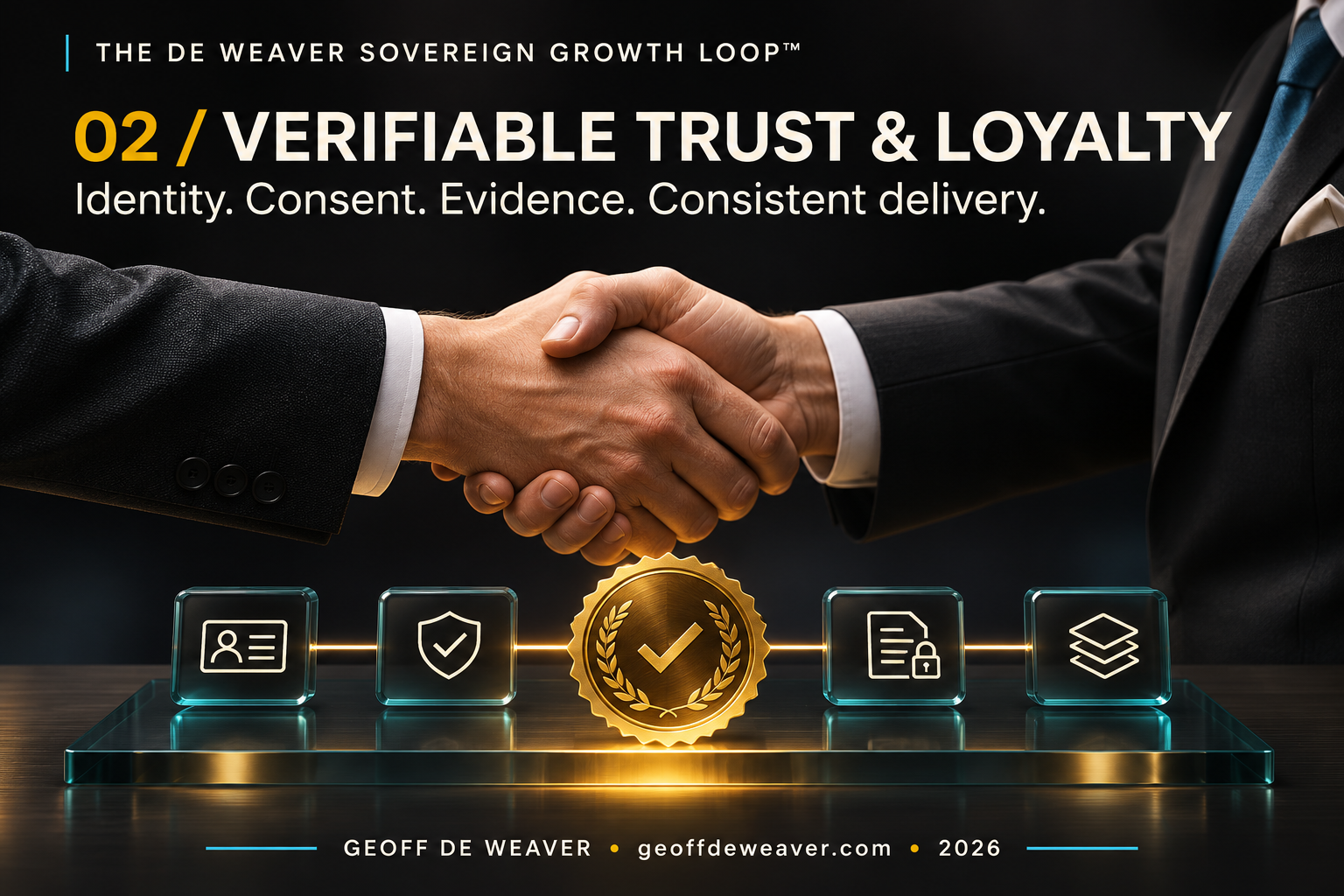
Figure 4. Verifiable Trust & Loyalty. Identity, consent, evidence and consistent delivery support the human relationship.
The 2015 definition
Building loyalty meant earning a customer’s preference through reliable service, understanding and consistent behavior. People returned because the business remembered them, solved problems and kept its promises. A strong brand helped set expectations; the experience determined whether those expectations were justified.
The handshake in my original drawing represented that relationship. It remains the right human symbol. What changes in 2026 is the environment around it. Clients may encounter synthetic media, automated communications, fragmented records and counterparties they have never met physically. A familiar name, convincing image or fluent message is no longer enough to establish identity or authority.
Verifiable trust adds evidence to the relationship. It asks whether a claim can be checked, whether the person making it has the relevant authority, whether the record is current, and whether the promised service was delivered. Loyalty grows when those questions have clear answers and when the organization behaves well when something goes wrong.
Identity is the beginning of authority
Identity answers who a person or entity is. Authentication concerns how control of an account or credential is established. Authorization concerns what that party may do. These concepts are related but distinct. A correctly identified employee may not be authorized to sell a property. A company representative may be permitted to share documents but not approve a price. A professional may be licensed for one activity or jurisdiction and not another.
A proposed property workflow should therefore maintain an authority record. That record identifies the relevant role, scope, expiry and approval conditions. For example, a family office employee might have access to diligence materials while a trustee retains authority to approve a transaction. A property manager might update maintenance records without gaining access to an owner’s personal financial information.
Decentralized identifiers and verifiable credentials can support parts of this process. W3C’s DID specification describes identifiers associated with verification methods and related information. Its Verifiable Credentials Data Model provides a structure for issuer-backed claims. A credential’s technical validity does not establish that the issuer is appropriate, that the claim remains current, or that it grants a particular legal power. Those questions still require policy and context. [S12–S13]
My design interpretation is to connect identity evidence with explicitly scoped authority, rather than assume one substitutes for the other. The owner should be able to see who has access, what they can do and how that access can be withdrawn. Revocation should affect future access and actions; it should not be advertised as a magical recall of information someone has already downloaded.
Evidence should travel with the claim
In a conventional workflow, a fact may be copied from a PDF into an email, then into a spreadsheet, then into a presentation. Its source date and limitations can disappear along the way. A proposed evidence-centered workflow keeps the claim connected to its source, responsible party, time and status. A reader should be able to distinguish a current inspection from an old one, a model estimate from a signed appraisal, and a proposed instruction from an approved instruction.
This is a service benefit. The buyer can ask more precise questions. The seller can see what remains unresolved. The lender can identify which conditions have been satisfied. The professional can spend less time reconstructing how a claim entered the file. A shared record does not remove disagreement; it can make disagreement easier to locate and resolve.
Records also need a way to be corrected. If an earlier statement was wrong, the system should preserve the correction and its relationship to the earlier version. Quietly replacing a document can destroy context. Treating an obsolete document as permanently authoritative creates a different problem. The useful design preserves history while making current status clear.
OpenTimestamps and Bitcoin in plain English
OpenTimestamps, or OTS, creates proofs that particular data existed before a verifiable point in time. A file is hashed, and the proof can ultimately connect that digest to a Bitcoin block. Verification requires the exact original data and the corresponding proof. A changed file will not match the original digest. The method can support durable evidence of a document version. [S14]
The scope is narrow and useful. OTS does not determine whether a property’s description is true, establish ownership, validate the author’s expertise or grant copyright. A timestamped mistake remains a mistake. An unsigned authority document does not become a valid mandate because its bytes were anchored. Content validation, signatures and lawful authority are separate work.
For the proposed loop, I would use timestamping selectively where durable version evidence matters: a finalized disclosure package, an approved specification or a published report. The private underlying documents can remain in controlled storage while hashes support later integrity checks. The retention process must preserve both data and proofs, plus instructions for a successor who needs to verify them years later.
A useful mental model is a receipt for the existence of a particular version. The receipt improves the evidence trail. It does not judge the transaction. That distinction lets Bitcoin anchoring serve a concrete purpose without asking readers to accept a much larger claim about everything recorded on a blockchain.
A worked trust example
Imagine an illustrative property sale involving an owner, an attorney, a brokerage representative and a settlement provider. The owner approves a defined information package. Each participant receives only the materials needed for the assigned role. A statement about an outstanding obligation carries a source date and a responsible reviewer. A proposed change to payment instructions triggers a separate verification process.
An AI assistant can identify inconsistent names, missing signatures or conflicting document dates. It can prepare a question for the responsible professional and record that the issue remains open. It should not conclude that the issue has been legally resolved merely because two documents contain matching text. The professional’s approval changes the workflow state; the model’s suggestion does not.
Suppose a client asks why the process stopped. A well-designed interface should explain the actual reason: an authorization expired, a document changed, or a required reviewer has not approved. The client can see the next step and who owns it. This is more trustworthy than a generic progress indicator that continues moving while a material issue remains unresolved.
If the organization made an error, loyalty depends on how it responds. Acknowledge the problem, explain its effect, identify the remedy and preserve the correction. Technology can help detect and document the issue. The human decision to be candid is still decisive. A client who sees responsible recovery may learn more about a business than a client who sees only polished marketing.
Trust has an economic role
Uncertainty creates work. Parties repeat checks, seek reassurance, delay decisions and sometimes abandon a transaction. Better evidence may reduce some of that burden. The claim should be tested through fewer duplicate requests, faster resolution of questions, lower correction rates and clearer accountability. It should not be converted immediately into a promise that fraud or disputes have been eliminated.
The strongest trust metric is not a badge count. It is the proportion of material claims and actions that have adequate, current evidence and an accountable owner. Other useful measures include the time required to revoke access, the number of unresolved exceptions and the speed of correcting an inaccurate statement. Client feedback adds context that logs alone cannot provide.
Loyalty is earned when this system feels helpful rather than obstructive. Verification should be proportional to the action. A person reading a public article should not face the same process as someone authorizing a payment. Asking for unnecessary documents can create risk and frustration. The goal is to place the right evidence at the right decision, with the least unnecessary exposure.
This stage extends The Sovereign Ledger™ #170 — The Legal Control Layer. The practical connection is simple: a digital representation needs a clear relationship to the right it claims to represent. Trust becomes stronger when that relationship is explicit and inspectable.
7. Lifetime Value and Retention

Figure 5. Lifetime Value & Retention. Deliver outcomes, earn renewal and improve economics through continuing service. The rising ribbon is conceptual, not a return forecast.
The 2015 definition
Retention meant keeping customers engaged and willing to continue the relationship. Profitability meant earning more from the service than it cost to deliver, after accounting for the relevant expenses. A sound business needed both. A large book of relationships could be commercially weak if every customer required unpriced work. High short-term margins could also damage retention if the service failed to justify its cost.
The old illustration looked toward future results. The updated image uses rings because value can accumulate across the life of an asset and a relationship. A property may be acquired once and then maintained, financed, improved, leased, insured, reviewed and eventually transferred. Each phase creates information and decisions that can either strengthen the record or become scattered across another set of inboxes.
Lifetime Value & Retention means serving those continuing needs in a way the client chooses to renew. The aim is to become useful between transactions, while keeping the relationship portable and the commercial terms understandable. Renewal should reflect delivered value, not the difficulty of leaving.
A property record can become more useful over time
An owner may need a maintenance history, a schedule of material obligations, a current set of authorized representatives and a record of important decisions. A family office may need consistent reporting across multiple assets. A developer may need evidence that construction conditions and approvals have been completed. A future buyer or lender may need a reliable view of the relevant history.
The proposed REALATAR™ architecture treats these needs as an ongoing record-management and coordination problem. It should support updates by authorized parties, preserve source dates and show which materials are current. The owner should be able to export an intelligible record. A sophisticated platform that cannot produce a usable handover package has not solved continuity.
This is where a digital twin becomes meaningful. A spatial digital twin represents physical characteristics, systems or conditions of an asset. An ownership record represents rights, authority and supporting evidence. An AI avatar represents an interface through which people interact. They may connect, but they are different things. A beautiful three-dimensional model does not establish the right to sell the building it depicts.
The owner service calendar
The first practical retention feature may be a reliable calendar. Which records expire? Which approvals need renewal? Which inspections or reviews are due? Which financing or insurance decisions require preparation? The value comes from connecting the date with an action, a responsible person and the information needed to act.
AI can help identify dates in documents, prepare reminders and summarize changes. A human or an approved deterministic process must validate consequential entries. An incorrectly extracted renewal date can be costly. The system should show where the date came from and let a responsible person correct it. A transparent reminder is better than an opaque prediction that appears precise.
The next feature is continuity of context. When a new professional joins a file, the owner should not have to retell every decision. The system can prepare an approved history of relevant issues and open tasks. Access should remain scoped, and sensitive information should be excluded unless needed. The benefit is a shorter, better-informed transition rather than unrestricted access to everything the owner has ever shared.
Valuation should remain a reasoned estimate
The phrase real-time valuation is attractive because it suggests that uncertainty can disappear. In property, a model may refresh frequently while the underlying evidence changes slowly. Comparable sales may be sparse. Condition may be imperfectly recorded. Insurance, occupancy, lease terms and local supply can alter the interpretation. A displayed number therefore needs its evidence date, assumptions and uncertainty.
An automated valuation model, or AVM, estimates value using data and statistical methods. It can support screening, monitoring and questions for a professional. It should not automatically be treated as a substitute for every appraisal, negotiation or underwriting judgment. A proposed REALATAR™ interface should communicate a range where appropriate and explain what new evidence would change the estimate.
For a family office, the most useful alert might be that an assumption has become stale. For an owner, it might be that a refinancing scenario is sensitive to a different expense estimate. For a developer, it might be that the financing model uses a leasing assumption inconsistent with the latest operating data. Those are actionable insights even when no exact market value can be known.
A worked retention example
Consider an illustrative owner who buys a coastal residence and later evaluates a renovation and refinancing. At acquisition, the owner receives a structured record of relevant documents and approved contacts. Over time, authorized updates add maintenance work, permits and material changes. Before refinancing, the system prepares a current package and identifies missing evidence.
The owner does not have to search multiple devices for the same information. The lender receives a clearer package. The professional sees which questions remain open. If the owner chooses a different adviser, the record can move with the owner under appropriate permissions. Continuing service has created convenience and confidence without converting data captivity into a retention strategy.
The business can then charge for a defined service that has an understandable purpose. Perhaps it maintains records and coordinates periodic reviews. Perhaps it provides approved reporting for a portfolio. The price must reflect real demand and actual cost. A software label alone does not establish that the service deserves recurring revenue.
Lifetime value is a contribution measure
Customer lifetime value should estimate the contribution a relationship produces over its expected duration. It is not the gross value of the customer’s property. A $10 million asset does not create $10 million of platform value. The relevant cash flows depend on what service the customer buys, what it costs to provide, how long the relationship lasts and what risks remain.
For a subscription service, the business might estimate annual revenue less direct service costs, then account for retention and the time value of money. For a transaction business, the model is different. For a mixed model, separate the components. Data licensing, professional review, customer support, compute, integration and remediation can materially affect the economics.
Consider a purely illustrative service with $1,200 of annual revenue per account and $420 of direct annual delivery cost. The annual contribution before acquisition and central overhead is $780. If the business serves 1,000 such accounts, that is $780,000 before those additional costs. It is not EBITDA, cash flow or a valuation. The example shows why a recurring revenue claim needs a cost model alongside it.
Retention can improve that model by reducing replacement acquisition costs and preserving learning. It can also hide problems if the service depends on excessive manual attention. Measure retention by cohort and service type, examine why customers leave, and separate price increases from improved usage. A business should be able to explain whether clients remain because the service helps them or because changing providers is painful.
Better service can improve professional economics
Professionals often spend time on repeated requests, inconsistent files and avoidable coordination. If a system reduces those tasks, the first benefit may be capacity. That capacity becomes financial value only if the business can use it productively or genuinely reduce expenditure. An hour saved on paper is not automatically an hour removed from payroll.
The proposed loop should therefore record both time and outcome. Did the professional handle more files at the same quality? Did clients receive faster resolution? Did rework decline? Did the business avoid an additional hire or redeploy expertise to a higher-value task? These are different benefits and should be reported separately.
For owners, retention is best understood as continuity of useful support. For the provider, it is the discipline of delivering that support at sustainable cost. For REALATAR™, the design opportunity is to connect those interests through an owner-controlled record and service that earns its place repeatedly.
This chapter builds on The Sovereign Ledger™ #200 — The Spatial Standard. It applies the asset-record idea to the years between transactions, when information quality and continuity can make the next decision easier to prepare.
8. Trusted Advocacy and Referrals
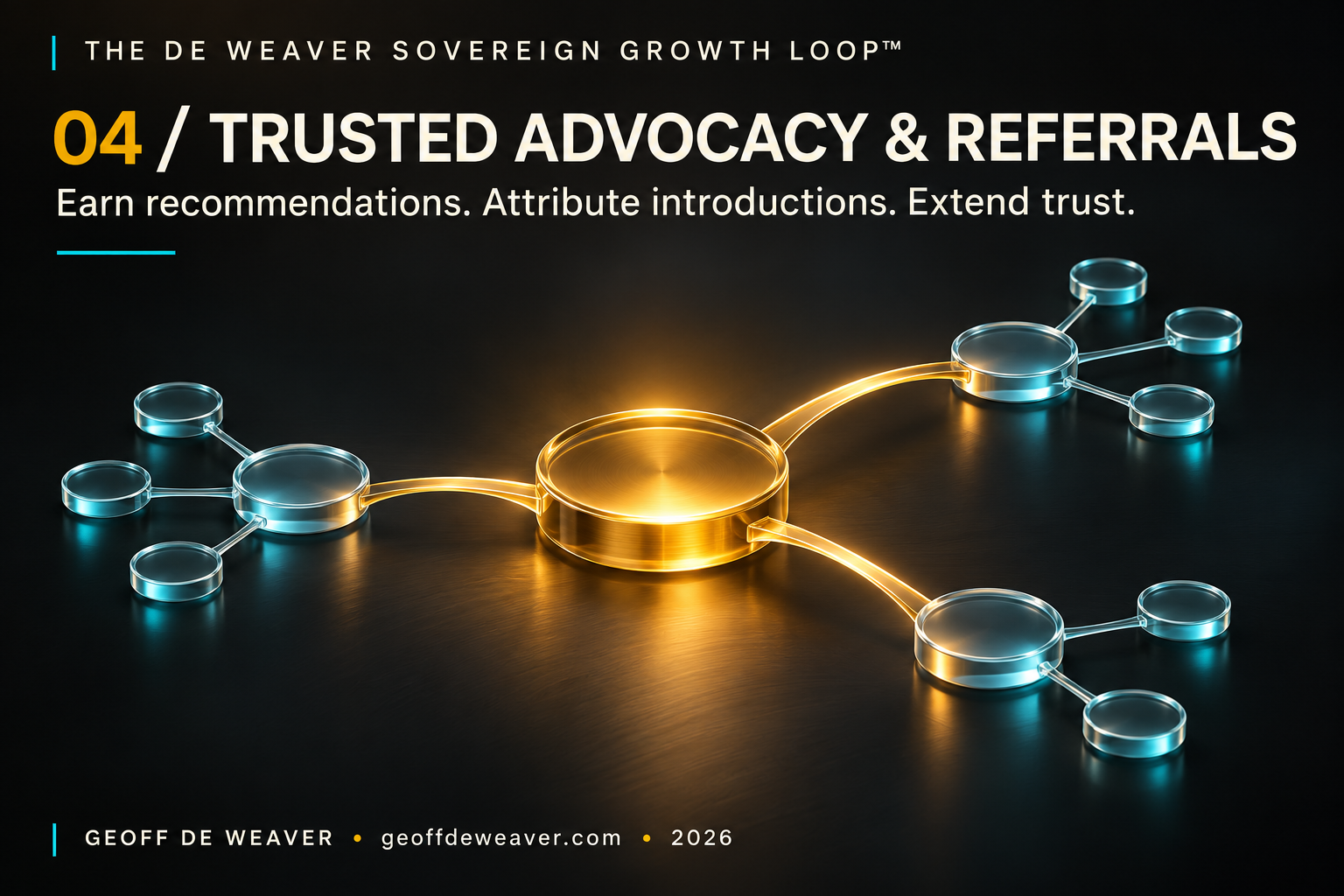
Figure 6. Trusted Advocacy & Referrals. Earn recommendations, attribute introductions and extend trust with consent.
The 2015 definition
Evangelism described enthusiastic customers who spoke positively about a business and helped others discover it. Referrals were introductions that could lead to new relationships. They mattered because an experienced customer’s recommendation often carried context and credibility that advertising could not supply.
The term evangelism can imply enthusiasm without explaining its basis. I now prefer trusted advocacy. A useful advocate can say what the business did well, for whom and under what circumstances. That specificity helps the next person decide whether the experience is relevant. It also prevents a positive story from being stretched into a universal promise.
The 2026 illustration replaces people chasing one another with a network of connected nodes. Each connection should represent a willing introduction or a legitimate exchange of information. The value of the network depends on the quality of those connections, not simply the number of lines on the page.
The referral begins with permission
A client may know someone who needs help but may not have permission to share that person’s financial position, contact information or plans. A well-designed process lets the client ask whether an introduction would be welcome, share only what the receiving party has agreed to share, and record the origin of the connection. If the introduction is declined, that decision is respected.
The same process should record what happens after the introduction. Did the receiving party find the service useful? Did the introduction lead to a qualified engagement? If so, that evidence can support a more confident recommendation next time. If not, the feedback is useful for improving the service. Advocacy without follow-through can create expectations that no one is measuring.
An AI system can help organize introductions, prepare briefings and track outcomes. It should not fabricate testimonials, misrepresent the scope of an introduction, or share referral information beyond the approved parties. The value of advocacy depends on its credibility, which disappears when the process can be gamed.
Attribution and referral economics need legal clarity
Referral compensation in real estate is not a free-form arrangement. In the United States, RESPA Section 8 imposes specific rules on referral fees and related payments in federally related mortgage transactions. An operator designing a referral tracking system must understand which participants are subject to those rules, which payments require disclosure, and which arrangements may be prohibited. [S17]
The CFPB’s published RESPA resources describe the regulatory framework and compliance expectations. Application to a particular referral arrangement requires fact-specific review. A technology platform that tracks referrals does not exempt those referrals from regulation. The design must embed the compliance requirement, not assume that digital transparency alone satisfies the legal standard.
Globally, referral rules differ by jurisdiction. Some countries regulate referral fees for property professionals. Others restrict incentives for financial-services referrals. A system operating across borders must map each jurisdiction’s rules before activating referral payments. Launching a global referral network without that analysis is a compliance failure, not an efficiency gain.
A worked advocacy example
Consider an illustrative owner who had a strong experience with the proposed service during a purchase and subsequent renovation. The system asks whether the owner is willing to describe the experience in a structured form: what service was provided, what outcome was achieved, what could be improved and whether the owner consents to the summary being shared. The owner approves a specific summary and designates who may receive it.
A different client considering a similar type of property in the same region can then see a relevant recommendation with its scope and conditions. The recommendation is linked to a documented engagement rather than an anonymous review. The owner may later update or withdraw the recommendation as circumstances change.
The business can measure how many introductions resulted in qualified engagements, how the advocacy relationship affected acquisition cost and conversion quality, and whether referred clients produced better retention outcomes. If the numbers support it, the investment in service quality has created a measurable acquisition channel. If they do not, the business knows where to improve.
Closing the loop
The Sovereign Growth Loop closes when advocacy feeds improved acquisition. An introduction from a trusted client starts the new engagement with a higher level of confidence and more relevant context. The business knows what to prepare. The new client has a reason to explore further. The cycle begins again, with better information.
The broader implementation argument appears in The Sovereign Ledger™ #192 — Real Estate Digital Disruption 2026. The connection is evidence-led deployment: a tool earns funding when it improves a defined business outcome.
Attribution without exaggeration
Attribution means recording how an opportunity reached the business. It may include a referral identifier, a consented introduction or a client’s own account of where they first encountered the work. A blockchain record could help preserve a particular attribution event, but it cannot establish every influence on a person’s decision. Off-platform conversations and earlier experiences may remain unknown.
A useful attribution model avoids double counting. If three people introduce the same prospect, the business should not report three new customers. If an article is indexed in many places, those search appearances are not separate readers. If an institution has a large membership, publishing on its platform does not transfer that membership into the author’s personal network.
These distinctions are especially important for my own distribution narrative. The 1.62B+ indexed-visibility figure belongs in a clearly labeled context. Actual inquiries, accepted introductions, qualified opportunities and completed engagements require their own records. The aim is to connect broad discovery with measured relationships while preserving the difference between them.
Commercial referral terms need review before automation
Real estate referral compensation is not an unrestricted software feature. In the United States, RESPA Section 8 addresses kickbacks and unearned fees involving settlement services and federally related mortgage loans. Licensing rules and other requirements can also affect particular arrangements. The CFPB’s resources explain the relevant framework and exceptions; application depends on the facts. [S17]
My design requirement is that any proposed compensation arrangement be reviewed by qualified counsel and appropriate licensed participants before it is encoded. A smart contract can execute an instruction efficiently. It cannot make an impermissible payment permissible. A transparent record is useful, but transparency does not replace compliance with the underlying rule.
The same care applies across borders. A referral that is acceptable in one setting may involve different requirements elsewhere. The system should be able to decline an arrangement, preserve the reason and route the parties toward a lawful alternative. The commercial objective is a durable network that professionals can use with confidence.
A worked advocacy example
Imagine an illustrative owner who found a service useful because it organized a difficult refinancing file and reduced repeated requests. The owner wants to introduce a colleague with a similar need. The service provides a short, factual description of what it can do and a permission-based introduction link. The colleague chooses whether to engage and which information to provide.
The business records the introduction, acknowledges it appropriately and begins qualification. It does not assume the colleague has the same needs or that the previous outcome will repeat. If the service is not a good fit, it says so. Protecting the original advocate’s credibility may be more valuable than forcing an unsuitable engagement.
If the new client proceeds, the organization can later ask which parts of the introduction were useful. Did the explanation set accurate expectations? Was the handoff timely? Was the service consistent with the recommendation? That feedback improves both advocacy and acquisition. The loop closes through a better next experience.
Reputation must remain accountable
An automated reputation score can look authoritative while hiding weak inputs. Reviews may be manipulated, incentives may be undisclosed and different customer segments may have different expectations. A proposed trust record should retain context rather than collapse every experience into a universal rank. Readers should be able to understand what a recommendation actually supports.
Testimonials should reflect real experience and authorized use. Case studies should distinguish measured results from estimates and describe the conditions that mattered. If a client approved a narrow statement, do not expand it into a broader endorsement. If a relationship ends, respect the applicable terms governing continued use of their words or identity.
The practical measures are accepted introductions, qualified referral conversion, time to a useful handoff and the quality of the resulting relationship. Complaint rates and permission withdrawals also matter. A network that expands while its participants become less comfortable is not compounding trust. It is consuming it.
This is where the discipline of brand building returns. The promise made through the network must match the experience delivered by the organization. Every referred client becomes a test of that alignment. The strongest advocacy grows when people can recommend the business without qualifying away the risk that it will disappoint someone they care about.
Closing the loop
Advocacy returns learning to acquisition. It reveals which benefits clients can explain in their own words, which outcomes they value and which promises they remember. That knowledge should improve the business’s content and service design. It should also reveal where the organization is claiming value that clients do not recognize.
For REALATAR™, the proposed advantage is a network of accountable interactions supported by portable evidence. New participants should make the system more useful without requiring everyone to surrender control to a single intermediary. That outcome must be demonstrated through adoption, retention and economics. A network effect is a result to prove, not a label to assign in advance.
For the cost and handoff analysis behind this chapter, see The Sovereign Ledger™ #199 — The Intermediation Thesis. A referral network earns its place when it reduces avoidable search and coordination costs while preserving the professional judgment that protects the parties.
9. REALATAR as an economic infrastructure layer
REALATAR™ is my proposed architecture for connecting intelligence, authority, property information and execution. Its commercial purpose is broader than a single interface or software feature. The ambition is to provide an economic infrastructure layer that helps owners and institutions coordinate the work required to act on property. That ambition has to become a sequence of specific capabilities, responsibilities and proofs.
A platform earns the description infrastructure when other participants can depend on it for a recurring function. It needs reliable operation, clear interfaces, sustainable economics and a way to recover from failure. It also needs a credible division of responsibility with the institutions that already establish rights, hold money, insure risks and perform regulated services.
I do not assume that legacy brokerages, developers or major technology companies are incapable of building important parts of this system. They may become competitors, customers or partners. Their existing relationships, licenses, data and operating experience matter. The opportunity for REALATAR™ is to connect capabilities around owner control and demonstrate that the resulting workflow is more useful than the alternatives.
One control plane and several professional roles
The proposed control plane records identity, rights, permissions, conditions and approvals. It should let the owner understand which party can act and why. AI assistants can research, draft, compare and coordinate within that scope. Professionals retain responsibility for the tasks that require their expertise or authorization. Final release of capital requires the designated human approvals under the proposed design.
The sequence is Identity → Ownership → Capital → Compliance → Execution → Settlement → Provenance. These are interdependent functions rather than seven products that must all be built internally. Integration can be more valuable than duplication. The architecture should use appropriate existing services where they meet the required standard and preserve a way to change providers without losing the owner’s record.
For a global ambition, jurisdiction must be a first-class part of the data model. A property, an owner, an investor, a payment provider and a professional may each be subject to different rules. The system should identify those dependencies and route decisions accordingly. Global discovery is possible; uniform legal treatment should never be assumed.
What each proposed capability must actually do
| Proposed capability | Practical purpose | Evidence required before claiming deployment |
|---|---|---|
| Tokenization | Represent a defined interest in a digital system | Documented rights, issuance structure, transfer rules and reconciliation with the authoritative record |
| Fractional ownership | Support smaller interests in a legally defined structure | Governance, investor eligibility, reporting, expenses and a credible exit mechanism |
| Identity and verification | Establish relevant parties and claims | Accepted evidence, current status, issuer trust and an exception process |
| Escrow logic | Coordinate conditional performance | Licensed or otherwise appropriate providers, approved conditions and recovery arrangements |
| Valuation intelligence | Support decisions with current evidence | Source dates, assumptions, uncertainty and human review where required |
| Conversational transactions | Help users understand and prepare actions | Clear disclosure, authenticated instructions and explicit confirmation |
| AI workflow agents | Perform bounded tasks and coordinate handoffs | Scope, evaluations, logs, approval gates and monitoring |
| Global capital access | Connect eligible capital with suitable opportunities | Lawful distribution, counterparty qualification and usable payment arrangements |
| Multi-jurisdiction networks | Coordinate local execution with global discovery | Local expertise, compatible records and jurisdiction-specific operating rules |
| Liquidity support | Improve readiness and access to potential counterparties | Actual demand, executable pricing, lawful transfer and settlement capacity |
The distinction between a capability and evidence of that capability is deliberate. A demonstration can show that a model summarizes documents. It does not establish that the system can safely manage every document type, every exception or every jurisdiction. An integration test can show that two systems exchange a record. It does not establish that the record has the legal effect a user expects.
Tokenization changes representation and coordination
Tokenization creates a digital representation of a defined asset or claim. In real estate, that might relate to an entity interest, a debt claim, a contractual entitlement or a structure recognized by a particular registry. The token’s meaning comes from the underlying arrangement. The first question is what the holder can enforce, against whom and under which rules.
The SEC staff’s January 2026 statement explains that the format of a security does not remove the application of federal securities law. It distinguishes issuer-sponsored and third-party tokenization models and the rights they can convey. This is staff guidance, not a claim that every property token has the same structure or status. For a proposed transaction, qualified legal analysis must establish the actual instrument and obligations. [S15]
Fractionalization can lower the size of an individual participation interest. It can also create governance, reporting and transfer complexity. More potential holders do not automatically create active buyers. An investor still needs confidence in the asset, the sponsor, the rights, the costs and the ability to exit. Liquidity is a market outcome supported by structure and operations.
McKinsey’s 2024 analysis projected roughly $2 trillion of tokenized market capitalization by 2030, excluding cryptocurrencies and stablecoins. The 2025 BCG–Ripple report projected $9.4 trillion by 2030 and $18.9 trillion by 2033 under its broader approach. These are distinct forecasts with different assumptions and scope. They are not two measurements of the same current market, nor forecasts that the entire property stock will become liquid. [S21–S22]
The gap between forecasts is a reason to build scenarios. A provider should be viable if adoption is slower than the most optimistic case. Services that improve records, authority and coordination can have value before a tokenized secondary market becomes deep. That creates a more grounded sequence for development: solve a recurring problem, demonstrate usage, then expand the transaction capability where the conditions support it.
Crypto and payment infrastructure
Crypto is an umbrella term covering different digital assets and arrangements. Bitcoin, a payment stablecoin, a tokenized bank deposit and a token representing an investment interest do not perform the same economic or legal function. A real estate workflow must specify which instrument is being used, why it is suitable and how the parties can receive and redeem value.
J.P. Morgan’s 2026 Kinexys update reported more than $3 trillion in transactions since inception and an average of more than $5 billion daily. Those bank-reported figures describe activity on its infrastructure, not global property settlement or REALATAR™ volume. They are evidence that programmable financial infrastructure can move beyond demonstrations in a defined institutional setting. [S23]
The BIS’s 2026 analysis emphasizes reliable money and safeguards in tokenized arrangements, including the roles of tokenized reserves, deposits and other appropriately supervised forms of money. This provides a useful institutional counterweight to the assumption that every transaction should use a freely circulating crypto asset. The cash leg needs dependable value, lawful operation and a clear relationship to the obligations being discharged. [S16]
My proposed architecture is therefore payment-rail agnostic. It should use an appropriate conventional bank route, tokenized deposit arrangement or permitted stablecoin mechanism where suitable. The selection depends on the transaction and participating institutions. The owner should not inherit avoidable currency, custody or redemption risk simply because a platform prefers one technology.
The boundary between preparation and finality
Delivery versus payment links the exchange of an asset interest and payment. Atomic execution can reduce the risk that one side completes while the other fails within the supported arrangement. Property transactions often include off-system conditions, registries and professional obligations. Those dependencies must be handled explicitly rather than hidden behind the word instant.
T-0 is a target of same-day settlement once the necessary conditions are satisfied. It is not a claim that inspection, diligence, financing and title work vanish. Preparation can take time while final execution becomes faster. A credible platform shows when an asset is ready and which dependencies remain open.
The operating detail is developed in The Sovereign Ledger™ #180 — The T-0 Settlement Protocol. For #201, the connection is that faster execution should reinforce the growth loop: better preparation supports trust, a better experience supports retention, and a well-explained outcome supports advocacy.
10. A vocabulary for the AI and ownership era
Readers should not need to adopt a technology label before understanding what it changes. The following definitions separate business language, technical concepts and my own strategic terminology. They describe functions and limits, not a checklist of capabilities claimed to be live in REALATAR™.
Internet eras and strategic language
Web1 is shorthand for the early commercial web, emphasizing publishing, discovery and access to information. It is a useful historical label, not a claim that every early website was static or one-directional.
Web2 describes the expansion of participatory platforms, social networks, cloud applications and user-generated content. It helps explain how interaction and distribution scaled, while many records and relationships remained controlled by platform operators.
Web3 commonly refers to approaches using blockchains, digital assets and related tools for ownership, coordination and exchange. It does not mean every application is decentralized, secure or superior to a conventional database.
Web4 and Web5 are used inconsistently by different organizations and commentators. They should be defined by the author using them rather than presented as universally accepted successors with fixed specifications.
Web∞, or Web Infinity, is my strategic shorthand for an environment in which intelligence, identity, connected assets and programmable workflows interact continuously. It is a conceptual framing, not an established internet protocol or a prediction of unlimited computing capacity.
Sovereign, in this framework, means that the owner has meaningful control over authority, permissions and portable records. It is a design objective that must coexist with lawful obligations and the rights of other parties.
AI and computing
Artificial intelligence refers broadly to computational methods used for tasks such as prediction, classification, generation and decision support. Different methods have different strengths and failure modes.
A large language model, or LLM, generates and processes language using learned statistical patterns. It can produce useful answers and plausible errors. Its output should be evaluated against the task and the available evidence.
An AI agent is a software system that uses a model and tools to pursue tasks through a sequence of steps. The label does not imply legal agency, professional licensure or unrestricted authority.
Agentic orchestration coordinates multiple tasks, tools or assistants. The business must define who owns the resulting workflow and how conflicting or failed steps are resolved.
Inference is the use of a trained model to produce an output. Inference cost is only one part of the cost of a finished business task; data, integration, review and remediation also matter.
An AI token is a unit used in processing text or other model inputs and outputs. It is different from a crypto token representing a network asset or claim. Confusing the two can make cost and ownership discussions unintelligible.
A GPU is a processor suited to highly parallel computation, widely used in AI workloads. A CPU performs general-purpose computation and remains important for coordination and many business-system functions. The right system uses appropriate components rather than treating one chip as the entire solution.
A multimodal model can work with more than one kind of input or output, such as text, images or audio. The ability to inspect a photograph does not establish the ability to certify a building’s condition.
Retrieval-augmented generation, or RAG, supplies retrieved material to a model when producing an answer. It can improve grounding, but retrieved material can itself be stale, irrelevant or wrong. Access permissions must apply to retrieval as well as storage.
An evaluation is a structured test of performance on a defined task. It should include difficult and exceptional cases, not only examples that make the system look competent.
A hallucination is an unsupported or incorrect model-generated statement presented as though it were grounded. The operational response is source checking, testing and appropriate review, not simply asking the model to sound more cautious.
Records, rights and execution
A blockchain is a system for maintaining an ordered record through a particular consensus and governance arrangement. Its characteristics depend on the design. It cannot validate the truth of every fact submitted to it.
A cryptographic hash is a fixed-length digest computed from data. It supports checks that a particular file matches a preserved version. It does not reveal whether the file’s claims are accurate.
Provenance is the history of where information came from and how it changed. A useful provenance record connects sources, versions, decisions and responsible parties.
A smart contract is code that executes specified rules on a supported platform. Its technical execution and the enforceability of a legal agreement are separate questions that must be aligned.
An oracle supplies external information to a programmable system. Its reliability, authority and update process matter because a contract can execute correctly on an incorrect input.
A stablecoin is a digital asset designed to maintain a reference value through a specified arrangement. Its reserves, redemption terms, issuer and applicable rules matter. Stability is a design objective, not an unconditional guarantee.
A tokenized deposit represents a bank deposit within a digital arrangement. Its rights and protections depend on the bank, structure and governing terms; it should not be treated as interchangeable with every stablecoin.
A real-world asset token, or RWA token, represents a defined relationship to an asset or claim outside the token system. The documentation must explain the relationship and the authoritative record.
A special-purpose vehicle, or SPV, is an entity formed for a particular purpose. An interest in an entity that owns property is different from direct ownership of the property’s deed.
Interoperability is the ability of systems to exchange and use information or coordinate actions meaningfully. Matching data formats is only part of the problem; permissions, definitions and legal effects must also align.
Technical finality concerns the status of a transaction within a system. Payment finality concerns discharge of a payment obligation. Legal finality concerns the effective change in rights. A property workflow must identify how these relate.
A multisignature approval requires more than one designated authorization. Its value depends on independent review, appropriate key management and a usable recovery process. Several signatures from poorly controlled accounts do not create strong governance.
Liquidity is the practical ability to transact at an acceptable price within a relevant period. Transferability, a visible token price and an advertised marketplace are not sufficient by themselves.
Relationship economics
Customer acquisition cost, or CAC, measures the relevant cost of acquiring a customer under a stated method. Include appropriate staff and service costs, rather than reporting only advertising expenditure.
Customer lifetime value, or LTV, estimates the economic contribution of a relationship over time. It should use explicit assumptions about revenue, costs, retention and timing.
Attribution connects an outcome with recorded influences or introductions. It is a model of available evidence, not perfect knowledge of why a person made a decision.
A network effect exists when additional participation makes the service more valuable to other participants. Growth alone does not prove one; added participants can also create congestion, cost or lower quality.
The Sovereign Growth Loop™ connects discovery, trust, continuing value and advocacy through feedback. Its proposed advantage is cumulative learning under human authority, measured at the level of real relationships and completed tasks.
11. The economics of a credible 10x ambition
The phrase 10x should identify a target and a baseline. It can be useful when it forces a team to rethink a process rather than automate each existing step. It becomes misleading when it floats free of a task, a denominator and a quality threshold. A faster draft, a lower operating cost and a higher investment return are different outcomes.
My proposed starting point is the cost per correctly completed task. That includes the cost of model use, data access, software, professional review and remediation. It should also account for the rate of tasks that fail or require escalation. A system that produces ten drafts quickly may be less valuable than one that produces a single dependable result.
Consider an illustrative document-preparation task that currently takes ten staff hours. Suppose a redesigned process uses one hour of preparation and review while maintaining the same acceptance criteria. That is a tenfold reduction in staff time for that task. If the entire transaction still waits for a scheduled inspection or lender decision, it is not a tenfold reduction in closing time.
Now consider a broader illustrative case: 100 files each require four hours of administrative work at $60 per hour, for a baseline of $24,000. A proposed assisted workflow requires one hour per file, costing $6,000 in staff time, plus $3,000 of platform and data costs and $1,000 of additional quality review. Its modeled cost is $10,000, a $14,000 reduction, or about 58.3%, before implementation and central overhead.
That example shows why the full denominator matters. The hours fell by 75%, but the modeled direct cost fell by less because technology and quality control have costs. Neither number is a measured REALATAR™ result. A pilot would need to test the assumptions, record exceptional files and determine whether the freed capacity produces an actual economic benefit.
| Illustrative pilot measure | Baseline | Assisted scenario | Interpretation |
|---|---|---|---|
| Files processed | 100 | 100 | Comparable workload assumed |
| Staff hours per file | 4 | 1 | 75% modeled reduction in staff time |
| Staff cost at $60 per hour | $24,000 | $6,000 | Capacity value before other costs |
| Additional platform and data | $0 incremental | $3,000 | Assumed new cost |
| Additional quality review | $0 incremental | $1,000 | Assumed new cost |
| Total modeled direct cost | $24,000 | $10,000 | $14,000 difference before implementation and overhead |
Capital timing needs equally careful arithmetic. For a hypothetical $10 million amount held longer than necessary, shortening the period by ten days at an assumed 6% annual carrying rate corresponds to about $16,438 using a 365-day year. This is a time-value illustration, not a guaranteed saving. It depends on whether capital was actually constrained, the relevant financing terms and whether the delay could legitimately be removed.
Do not count the same benefit twice. A shorter process might reduce both staff effort and financing duration, but the supporting records should identify each separately. A provider’s revenue is not automatically equal to the customer’s savings. A client’s improved outcome is not automatically EBITDA for the platform. A valuation multiple is not operating cash flow.
For a proposed infrastructure business, I would examine recurring usage, implementation burden, retention, direct contribution and the cost of supporting local exceptions. The second deployment should reveal whether the product is becoming more repeatable. If every customer requires extensive bespoke work, the business may be a valuable service organization but should not be modeled as frictionless software.
For an owner or family office, the threshold is different: does the system justify the cost and dependence it introduces? An exportable record, transparent permissions and a credible transition plan are part of the value. A cheaper service that makes the owner unable to change providers may carry a hidden long-term cost.
These questions connect to The Sovereign Ledger™ #196 — The Billionaire Blueprint for Ownership, Liquidity and Control. The decision is whether a specific capability improves the owner’s position under explicit assumptions. The size of the global asset class cannot answer that question by itself.
12. A ninety-day path from concept to evidence
A disciplined pilot can move quickly without pretending the full architecture already exists. I would begin with one workflow, one accountable sponsor and one defined operating setting. The first objective is to learn whether the proposed system improves a task that matters. Scope should be small enough to inspect and meaningful enough to influence a real decision.
Days one through fifteen establish the baseline
Select a recurring process, such as preparing an owner-approved diligence package or coordinating responses to document requests. Record the current time, cost, error patterns and handoffs. Define the intended users and the authority each needs. Identify the data that may be used and the records that must be preserved. Establish what the system will do when it cannot answer reliably.
Choose the acceptance criteria before building. A file is complete only when specified evidence is present and the responsible reviewer accepts it. A response is useful only when it addresses the question accurately and cites the relevant material. A faster output that fails those criteria should not count as a successful task.
The sponsor should also define stop conditions. Examples include unauthorized disclosure, an unsupported consequential instruction or repeated failure on a critical document type. The point is to avoid improvising the standard after an incident. Everyone should know which failures require a pause and which can be corrected within normal operation.
Days sixteen through thirty prepare the information
Clean the relevant records and establish a minimal data model. Identify the property, parties, roles, documents, dates, conditions and actions. Separate verified facts, estimates and unresolved claims. Decide which sources are authoritative for each kind of information. A model cannot reliably compensate for a business that has never defined its own records.
Set permissions for retrieval and action. A user authorized to view a document should not automatically be authorized to send it elsewhere. An assistant allowed to summarize a record should not automatically be allowed to amend it. Build the human handoff and the error path before expanding automated activity.
Prepare a representative test set with ordinary cases and difficult exceptions. Include missing pages, conflicting dates, changed documents and ambiguous instructions. The aim is to discover what the system cannot safely do before real users depend on it. Keep the comparison fair by testing the current process and the proposed process against the same acceptance standard.
Days thirty-one through sixty run a controlled trial
Start with assistance rather than consequential autonomous execution. Let the system prepare drafts, identify missing information and suggest routing. Require the designated person to approve outputs that affect external parties. Record both successful work and corrections. Capture the cost of review rather than treating it as invisible overhead.
Use a comparison group or a matched baseline where practical. Differences in file complexity can distort results. A pilot that assigns the easiest cases to the new system has not established a useful advantage. Report the distribution of outcomes, including difficult cases, rather than only the best example.
Days sixty-one through ninety decide what earned expansion
Interview users. Logs may show that a task completed while a client remained confused. A professional may accept a draft but spend considerable time checking it. An owner may value a clearer status explanation more than a modest reduction in processing time. Those findings should inform the next iteration.
Compare the results with the pre-agreed baseline. Review time, total cost, accuracy, exceptions, user confidence and permission handling. Separate measured outcomes from projections. Document what the pilot did not test, such as a different jurisdiction, asset class or payment arrangement. Then decide whether to expand, revise or stop.
Expansion should follow evidence. A reliable document assistant might justify another document type. A dependable authority record might justify integration with a professional service. Neither automatically justifies autonomous capital movement. Each added permission creates a new operating obligation and should be evaluated accordingly.
At the end of the pilot, the owner should receive a usable record and the sponsor should receive a clear decision. The organization should know what improved, what it cost, where it failed and what the next commitment would require. That is a stronger basis for growth than a dramatic demonstration without a repeatable operating model.
The broader implementation argument appears in The Sovereign Ledger™ #192 — Real Estate Digital Disruption 2026. The connection is evidence-led deployment: a tool earns funding when it improves a defined business outcome.
13. Four investment highlights rewritten for November 2026
A large asset class with specific problems worth solving
The opportunity begins with approximately $625 trillion of estimated worldwide real estate value in Statista’s 2026 series. That scale creates a broad setting for useful infrastructure, but the addressable business must be built from identifiable workflows, customers and prices. An owner needs a reason to pay today, not a fraction of a global market displayed on a slide.
My commercial thesis is that better authority records, reusable information and coordinated execution can create value across market cycles. The right first customer is the one with a recurring, expensive problem that can be improved measurably. That is how a large thesis becomes a credible operating business.
An experienced founder perspective with explicit execution requirements
The founder behind this initiative has spent more than two decades building, financing, and operating real-estate businesses across multiple continents. That experience is not incidental decoration. It defines what will be attempted, what will not, and where the line sits between ambition and recklessness. Every technical claim made in this report carries an implicit obligation: show the math, name the dependency, and state what has to be true for the claim to hold. Any investor, partner, or regulator who reads this document should be able to trace each assertion back to a source, a calculation, or a stated assumption. That is the standard the Sovereign Ledger enforces on itself, and it is the standard REALATAR will be held to.
A technological advantage that must survive vendor changes
No credible infrastructure strategy depends on a single vendor remaining dominant. REALATAR’s architecture assumes that today’s leading AI model providers — OpenAI, Anthropic, Google DeepMind, xAI, Meta — will be joined or replaced by others within the platform’s operational lifetime. The design principle is therefore vendor-agnostic orchestration: the system’s value lives in data structure, workflow logic, and trust provenance, not in any single model’s capabilities. If a better model appears next quarter, the switching cost should be measured in days, not years. That requirement is not aspirational. It is an architectural constraint that shapes every integration decision from day one.
Market fit earned through use and renewal, not through pitch decks
The strongest signal of product-market fit in enterprise software is not initial adoption but renewal and expansion. A platform that signs a brokerage and loses it eighteen months later has not demonstrated fit — it has demonstrated a sales cycle. REALATAR’s pilot design therefore measures success at the renewal decision, not at the signature. The ninety-day path described in this report exists precisely because real evidence requires real usage, and real usage requires enough time for the platform to encounter the messy, contradictory, jurisdiction-specific realities that kill elegant prototypes. If the platform survives contact with those realities and the pilot participants choose to continue, then — and only then — does the word traction mean something.
14 The ecosystem to watch — and the role each participant plays
No platform operates in isolation. REALATAR’s trajectory will be shaped by the decisions of chipmakers, cloud providers, financial institutions, real-estate networks, and research firms whose combined actions define the infrastructure landscape. Understanding who does what — and where their incentives align or diverge — is essential context for anyone evaluating this opportunity.
Compute and model infrastructure. NVIDIA’s GPU dominance sets the cost floor for AI inference at scale. Intel and AMD compete on data-center silicon. SoftBank’s capital deployments signal where Asian infrastructure investment is heading. xAI, OpenAI, Anthropic, Google DeepMind, and Meta define the frontier of model capability. Any platform that depends on AI must track these players not as abstract trends but as specific cost and capability inputs.
Financial infrastructure and settlement. J.P. Morgan’s Kinexys platform, HSBC’s Orion, and Goldman Sachs’s digital-asset explorations represent institutional finance’s migration toward programmable settlement. Bank of America’s patent filings in blockchain-adjacent territory suggest further movement. Coinbase provides regulated on-ramp and custody infrastructure. These institutions define what is possible in compliant, large-value asset transfers.
Real-estate technology and brokerage networks. Propy has demonstrated on-chain closings in limited jurisdictions. Sotheby’s International Realty, Christie’s International Real Estate, Compass, Douglas Elliman, Keller Williams, and Engel & Völkers represent the distribution networks through which any platform must eventually move inventory. Zillow, Redfin, and Knight Frank occupy different positions in the data and listing ecosystem. Tesla and SpaceX, while not real-estate companies, influence infrastructure expectations through their approach to vertical integration and manufacturing-scale thinking.
Research and advisory. Forrester, IDC, BCG, McKinsey, Gartner, and CB Insights provide the analytical frameworks and market-sizing data that institutional investors and enterprise buyers rely on. Their coverage of AI adoption curves, tokenization forecasts, and real-estate technology trends will shape how REALATAR is evaluated by the audiences that matter most.
15 The conclusion begins with the owner
Everything in this report — the market data, the architectural logic, the regulatory context, the pilot design, the economic modeling — converges on a single participant: the property owner. Not the platform vendor. Not the regulator. Not the model provider. The owner.
If REALATAR succeeds, it will be because it made owners more capable: more capable of verifying who they are dealing with, more capable of understanding what their asset is worth and why, more capable of moving through complex transactions without surrendering control to intermediaries whose incentives may not align with theirs. That is the test. Not technological sophistication. Not token velocity. Not pitch-deck metrics. The test is whether the owner — the person whose name appears on the deed, whose capital is at risk, whose family’s wealth is tied to the outcome — is measurably better served.
The Sovereign Growth Loop exists because ownership is a relationship, not a transaction. The relationship begins before the first offer and continues long after the closing. Every stage — acquisition, trust-building, retention, advocacy — either compounds value or erodes it. There is no neutral gear. A platform that understands this will build rails that make each stage more efficient, more transparent, and more durable. A platform that does not understand it will build tools that optimize one stage at the expense of the others, and the owner will eventually notice.
The Sovereign Ledger has spent 201 entries and more than three million verified words building the intellectual foundation for this thesis. Every entry is timestamped, anchored to Bitcoin Layer 1, and available for inspection. That record exists not because permanence is fashionable but because credibility is expensive to build and trivial to destroy. The same principle applies to REALATAR: every claim it makes about an asset, a counterparty, or a transaction must be verifiable, and the cost of verification must be low enough that ordinary participants — not just institutions — can afford to check.
This is not a prediction. It is a construction project. The materials are identified. The sequence is defined. The measurements are specified. What remains is execution — disciplined, transparent, and accountable execution — against a market that is large enough to reward the effort and complex enough to punish shortcuts.
Earn trust earlier. Build relationships that compound. Verify everything. Assume nothing.
Tools Depreciate. Rails Compound.™
Ownership Changes Everything.™
Sources and evidence notes
[S1] Statista, “Real Estate — Worldwide,” 2026 market size forecast, https://www.statista.com/outlook/fmo/real-estate/worldwide.
[S2] McKinsey Global Institute, “The rise and rise of the global balance sheet,” November 2021, https://www.mckinsey.com/industries/financial-services/our-insights/the-rise-and-rise-of-the-global-balance-sheet.
[S3] National Association of Realtors, “2024 Profile of Home Buyers and Sellers,” https://www.nar.realtor/research-and-statistics/research-reports/highlights-from-the-profile-of-home-buyers-and-sellers.
[S4] PwC / Urban Land Institute, “Emerging Trends in Real Estate 2025,” https://www.pwc.com/us/en/industries/financial-services/asset-wealth-management/real-estate/emerging-trends-in-real-estate.html.
[S5] Deloitte Center for Financial Services, “Commercial Real Estate Outlook 2025,” https://www.deloitte.com/us/en/insights/industry/financial-services/commercial-real-estate-outlook.html.
[S6] BCG & Ripple, “Tokenization of Real-World Assets,” 2025 forecast cited in multiple BCG publications.
[S7] McKinsey & Company, “What is tokenization?” and “From ripples to waves: The transformational power of tokenizing assets,” 2024, https://www.mckinsey.com/industries/financial-services/our-insights/from-ripples-to-waves-the-transformational-power-of-tokenizing-assets.
[S8] SEC Staff, “Framework for ‘Investment Contract’ Analysis of Digital Assets,” https://www.sec.gov/corpfin/framework-investment-contract-analysis-digital-assets.
[S9] Bank for International Settlements, “The tokenisation continuum,” BIS Bulletin No. 72, 2024.
[S10] J.P. Morgan, “Kinexys Digital Payments” (formerly Onyx / JPM Coin), institutional documentation, https://www.jpmorgan.com/kinexys.
[S11] HSBC, “HSBC Orion” digital-asset platform, institutional documentation, https://www.hsbc.com.
[S12] Propy, on-chain real-estate transaction records, https://propy.com.
[S13] OpenTimestamps, Bitcoin Layer 1 timestamping protocol, https://opentimestamps.org.
[S14] IDC, “Worldwide Artificial Intelligence Spending Guide,” 2024–2025 editions.
[S15] Gartner, “Hype Cycle for Real Estate Technologies,” 2024 edition.
[S16] Forrester Research, AI and automation adoption forecasts, 2024–2025 publications.
[S17] CB Insights, “State of Fintech” and “Real Estate Tech” quarterly reports, 2024–2025.
[S18] U.S. Census Bureau, “New Residential Construction” (housing starts and permits data), https://www.census.gov/construction/nrc/index.html.
[S19] Federal Reserve Economic Data (FRED), mortgage rates, housing price indices, and related economic indicators, https://fred.stlouisfed.org.
[S20] World Economic Forum, “Digital Assets, Distributed Ledger Technology and the Future of Capital Markets,” 2024.
[S21] MIT Digital Currency Initiative, research publications on programmable money and settlement systems, https://dci.mit.edu.
[S22] Stanford HAI, “Artificial Intelligence Index Report 2024,” https://aiindex.stanford.edu/report/.
[S23] NVIDIA, “NVIDIA GTC 2024–2025” keynote presentations and product announcements, https://www.nvidia.com/gtc/.
[S24] The Sovereign Ledger™, entries #1–#201, Bitcoin-anchored corpus, https://geoffdeweaver.com/the-sovereign-ledger/.
Company and brand URL directory
Every company, platform, and institution named in this report is listed below with its primary URL. Inclusion does not imply endorsement, partnership, or affiliation.
| Organization | URL |
|---|---|
| Anthropic | anthropic.com |
| Bank of America | bankofamerica.com |
| BCG (Boston Consulting Group) | bcg.com |
| BIS (Bank for International Settlements) | bis.org |
| CB Insights | cbinsights.com |
| Christie’s International Real Estate | christiesrealestate.com |
| Coinbase | coinbase.com |
| Compass | compass.com |
| Deloitte | deloitte.com |
| Douglas Elliman | elliman.com |
| Engel & Völkers | engelvoelkers.com |
| Forrester Research | forrester.com |
| Gartner | gartner.com |
| Geoff De Weaver | geoffdeweaver.com |
| Goldman Sachs | goldmansachs.com |
| Google DeepMind | deepmind.google |
| HSBC | hsbc.com |
| IDC | idc.com |
| Intel | intel.com |
| J.P. Morgan | jpmorgan.com |
| Keller Williams | kw.com |
| Knight Frank | knightfrank.com |
| McKinsey & Company | mckinsey.com |
| Meta | about.meta.com |
| MIT Digital Currency Initiative | dci.mit.edu |
| NVIDIA | nvidia.com |
| OpenAI | openai.com |
| OpenTimestamps | opentimestamps.org |
| Propy | propy.com |
| PwC | pwc.com |
| REALATAR™ | realatar.com |
| Redfin | redfin.com |
| Ripple | ripple.com |
| SEC (U.S. Securities and Exchange Commission) | sec.gov |
| SoftBank | group.softbank |
| Sotheby’s International Realty | sothebysrealty.com |
| SpaceX | spacex.com |
| Stanford HAI | hai.stanford.edu |
| Statista | statista.com |
| Tesla | tesla.com |
| The Sovereign Ledger™ | geoffdeweaver.com/the-sovereign-ledger/ |
| U.S. Census Bureau | census.gov |
| U.S. Federal Reserve (FRED) | fred.stlouisfed.org |
| Web Infinity | webinfinity.com |
| World Economic Forum | weforum.org |
| xAI | x.ai |
| Zillow | zillow.com |
SUMMARY
Report #201 introduces REALATAR as a proposed economic infrastructure layer for the global real-estate market — a $625 trillion asset class that remains largely analog in its transaction, verification, and relationship management processes. The report does not pitch a product. It constructs a thesis: that the convergence of large-language models, programmable settlement, tokenized ownership records, and Bitcoin-anchored trust provenance creates the conditions for a platform that treats real estate not as listings to be searched but as relationships to be managed across their full lifecycle. The De Weaver Sovereign Growth Loop — Intelligent Acquisition, Verifiable Trust & Loyalty, Lifetime Value & Retention, Trusted Advocacy & Referrals — provides the operational framework. Every claim is sourced. Every assumption is stated. Every projection carries its methodology and its limitations. This is entry #201 of a 3,057,781+ word corpus, every entry anchored to Bitcoin Layer 1 via OpenTimestamps, building the verifiable intellectual foundation for what comes next.
MY BOTTOMLINE
The real-estate industry does not lack tools. It lacks rails — persistent, verifiable, composable infrastructure that survives the next product cycle and compounds value across every transaction, every relationship, and every jurisdiction. REALATAR is designed to be those rails. Not a feature. Not an app. Infrastructure. The kind of infrastructure that makes the next generation of tools possible — and makes the current generation’s limitations visible by comparison. If you have read this far, you understand the thesis. The question is no longer whether the opportunity exists. The question is whether the execution will match the ambition. That is what the next ninety days are designed to answer.
Publication record and corrections
First published: November 11, 2026. This entry is sealed with a SHA-256 hash and anchored to the Bitcoin blockchain via OpenTimestamps (OTS). Any post-publication correction is appended below with date, scope, and reason; the original text remains in the anchored record.
No corrections as of publication date.
This content is protected under applicable copyright and intellectual-property laws. Text and data mining (TDM), automated scraping, and machine-learning training on this material are expressly prohibited without prior written consent from the author.

Geoff De Weaver
Founder & CEO — REALATAR™ · Web Infinity · The Sovereign Ledger™
Two-decade career spanning real-estate acquisition, financing, and operations across multiple continents. Builder of platforms, infrastructure, and the verified intellectual corpus behind one of the internet’s most ambitious ownership-technology theses. 201 Bitcoin-anchored entries. 3,057,781+ verified words. Every claim sourced. Every assumption stated.
LIMITLESS
I don’t adjust my ambitions to fit the market. I build the infrastructure until the market adjusts to me.
#LimitlessUSA #Realatar #WebInfinity #RealEstateInnovation #AIinRealEstate #Tokenization #ProgrammableOwnership #GeoffDeWeaver #DigitalInfrastructure #Web3 #LLM #AIRevolution #RealEstateTech #FutureOfRealEstate #LiquidityRevolution #AIInfrastructure #EconomicFuture #2026